 Source: goo.co.jp
 First of all, I should apologise to any and all who have been reading this blog for the delay in new posts. For the past two weeks I have spent time in Japan, which was then followed by the inevitable catching up at work which took a week to clear. In that time a number of events took place in Japan and abroad concerning Japan’s foreign relations, the most prominent of which was PM Abe’s visit to Russia to ‘shoot the breeze’, as it were, with Russian President Putin (and which resulted in the first issue of a joint statement by the leaders of both countries in a decade, although there were no major changes to the bilateral relationship contained within that statement). Another involved a number of statements made by members of the LDP and other right wing factions in relation to the question of war responsibility and the issue of ‘comfort women’ (or as Hillary Clinton directed the US State Department to refer to them – ‘sex slaves’). It’s the latter issue that both intrigues and worries me.
The whole question of just how genuinely the LDP intends to address historical issues kicked off on Sunday during an interview broadcast on NHK with LDP Policy Research Council head Takaichi Sae. In relation to the 1995 Murayama Statement, cited by successive Japanese governments as proof of Japan’s contrition regarding its actions during the 1930s and 40s which are referred to as a consequence of ‘mistaken policy’, Ms Takaichi said that「当時、日本が資源封鎖されてもまったく抵抗せずに植民地となる道を選ぶのがベストだったのか」”Given that Japan was cut off from resources at the time, was the choice of becoming a colony without offering any resistance (to other powers) the best one?”.
Ms Takaichi then followed the above up with this comment「当時の国際状況の中で何が正しかったかを自信を持って主張できる政治家は今の日本にはいない。だから、(談話は)ちょっとおかしい」”In the middle of the international situation at the time, those politicians who knew what was right and could express their views with certainty don’t exist in Japan now. That’s why (the Statement) is a bit odd”. It certainly isn’t the most erudite of defences for past aggression, but the crux of what Takaichi was driving at was that politicians in the 30s knew what they wanted and were prepared to take it (or were forced to do so by an aggressive military, but Takaichi left that part out), yet today’s politicians are all wishy-washy and don’t know what they stand for.
Not unexpectedly, Takaichi also defended the actions of other Abe cabinet and LDP members in visiting Yasukuni Shrine by saying 「ここで(参拝を)やめたら終わりだ。国策に殉じて命をささげた方をいかに慰霊するかは(日本の)内政の問題だ」”If we stop (visits in honour of the deceased) then it’s over. The extent to which those who gave their lives for their country should be venerated is a domestic political problem.” (J) Such views as these have raised sufficient concerns abroad that Chief Cabinet Secretary Suga has had to reiterate on numerous occasions (such as this – J and this - E) the position of the Abe Cabinet on questions of historical responsibility and the resolve of the government to continue to endorse the messages contained both in the Murayama Statement and that of the Kono Statement of 1993.
Not that many abroad have been all that convinced. A report produced by the US Congress Research Service into issues affecting current US-Japan relations (published May 1, 2013 - E) noted that the Abe government’s ambivalent relationship to previous statements of contrition could destabilise cooperation among US allies in East Asia, among other negative effects. The fact that Congress had raised the issue of historical memory as a potential friction point didn’t sit well with the Abe administration, who issued a retort to the report, saying that its content was based on a ‘misunderstanding’ regarding PM Abe’s comments on the definition of ‘invasion’ and ‘aggression’ (E).
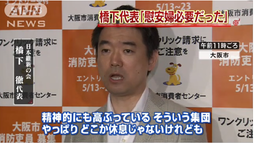
This was then followed up by an absolute bombshell of a statement from Osaka Mayor Hashimoto Toru on Monday in relation to the question of prostitution and military occupation. Firstly, Hashimoto denied the existence of any evidence linking the Imperial Japanese military to the administration of brothels staffed by comfort women. Then he said this …“To maintain discipline in the military, it must have been necessary at that time (to have comfort women),” “For soldiers who risked their lives in circumstances where bullets are flying around like rain and wind, if you want them to get some rest, a comfort women system was necessary. That's clear to anyone.” (E) Hashimoto then went on to dig himself even further into a diplomatic hole by suggesting that prostitution was a natural outlet for soldiers, citing the Futenma base in Okinawa as an example of the logic behind this statement (the US Marine Corp wisely chose not to comment in return) (J).
So what are observers to make of this? Does it pander to the right wing within the electorate? Most certainly it does. Does that guarantee more votes for conservative parties in the Upper House election? Possibly, but it’s too early to tell what effect these statements will have on the domestic audience. Both commentators (and Ishihara Shintarō, who stated that the link between the military and prostitution was a ‘matter of historical fact’ J) are placing domestic conservative resentment at having to continually apologise for past misdeeds at the forefront of their strategy for winning votes. Their rhetoric taps into the latent irritation of the average Japanese citizen towards foreign political leaders besmirching Japan while at the same time ignoring the contributions Japan has made to regional stability and prosperity.
Other nations, however, may not be so understanding of Japan’s position when reacting to such inflammatory rhetoric. While South Korea and China can be assured of issuing official protests at such language, the manner in which it has been said, and the refusal by PM Abe himself to fully endorse the message of either the 1993, 1995, or 2005 statements creates ill will in the region, even in those countries that have maintained a fairly positive relationship with Japan for decades. It is a diplomatic headache that Japan could do without.
The whole question of just how genuinely the LDP intends to address historical issues kicked off on Sunday during an interview broadcast on NHK with LDP Policy Research Council head Takaichi Sae. In relation to the 1995 Murayama Statement, cited by successive Japanese governments as proof of Japan’s contrition regarding its actions during the 1930s and 40s which are referred to as a consequence of ‘mistaken policy’, Ms Takaichi said that「当時、日本が資源封鎖されてもまったく抵抗せずに植民地となる道を選ぶのがベストだったのか」”Given that Japan was cut off from resources at the time, was the choice of becoming a colony without offering any resistance (to other powers) the best one?”.
Ms Takaichi then followed the above up with this comment「当時の国際状況の中で何が正しかったかを自信を持って主張できる政治家は今の日本にはいない。だから、(談話は)ちょっとおかしい」”In the middle of the international situation at the time, those politicians who knew what was right and could express their views with certainty don’t exist in Japan now. That’s why (the Statement) is a bit odd”. It certainly isn’t the most erudite of defences for past aggression, but the crux of what Takaichi was driving at was that politicians in the 30s knew what they wanted and were prepared to take it (or were forced to do so by an aggressive military, but Takaichi left that part out), yet today’s politicians are all wishy-washy and don’t know what they stand for.
Not unexpectedly, Takaichi also defended the actions of other Abe cabinet and LDP members in visiting Yasukuni Shrine by saying 「ここで(参拝を)やめたら終わりだ。国策に殉じて命をささげた方をいかに慰霊するかは(日本の)内政の問題だ」”If we stop (visits in honour of the deceased) then it’s over. The extent to which those who gave their lives for their country should be venerated is a domestic political problem.” (J) Such views as these have raised sufficient concerns abroad that Chief Cabinet Secretary Suga has had to reiterate on numerous occasions (such as this – J and this - E) the position of the Abe Cabinet on questions of historical responsibility and the resolve of the government to continue to endorse the messages contained both in the Murayama Statement and that of the Kono Statement of 1993.
Not that many abroad have been all that convinced. A report produced by the US Congress Research Service into issues affecting current US-Japan relations (published May 1, 2013 - E) noted that the Abe government’s ambivalent relationship to previous statements of contrition could destabilise cooperation among US allies in East Asia, among other negative effects. The fact that Congress had raised the issue of historical memory as a potential friction point didn’t sit well with the Abe administration, who issued a retort to the report, saying that its content was based on a ‘misunderstanding’ regarding PM Abe’s comments on the definition of ‘invasion’ and ‘aggression’ (E).
This was then followed up by an absolute bombshell of a statement from Osaka Mayor Hashimoto Toru on Monday in relation to the question of prostitution and military occupation. Firstly, Hashimoto denied the existence of any evidence linking the Imperial Japanese military to the administration of brothels staffed by comfort women. Then he said this …“To maintain discipline in the military, it must have been necessary at that time (to have comfort women),” “For soldiers who risked their lives in circumstances where bullets are flying around like rain and wind, if you want them to get some rest, a comfort women system was necessary. That's clear to anyone.” (E) Hashimoto then went on to dig himself even further into a diplomatic hole by suggesting that prostitution was a natural outlet for soldiers, citing the Futenma base in Okinawa as an example of the logic behind this statement (the US Marine Corp wisely chose not to comment in return) (J).
So what are observers to make of this? Does it pander to the right wing within the electorate? Most certainly it does. Does that guarantee more votes for conservative parties in the Upper House election? Possibly, but it’s too early to tell what effect these statements will have on the domestic audience. Both commentators (and Ishihara Shintarō, who stated that the link between the military and prostitution was a ‘matter of historical fact’ J) are placing domestic conservative resentment at having to continually apologise for past misdeeds at the forefront of their strategy for winning votes. Their rhetoric taps into the latent irritation of the average Japanese citizen towards foreign political leaders besmirching Japan while at the same time ignoring the contributions Japan has made to regional stability and prosperity.
Other nations, however, may not be so understanding of Japan’s position when reacting to such inflammatory rhetoric. While South Korea and China can be assured of issuing official protests at such language, the manner in which it has been said, and the refusal by PM Abe himself to fully endorse the message of either the 1993, 1995, or 2005 statements creates ill will in the region, even in those countries that have maintained a fairly positive relationship with Japan for decades. It is a diplomatic headache that Japan could do without.
 RSS Feed